Living in Basel
Pharma capital of Europe, art-museum dense, on the Rhine where three countries meet.
Overview
Basel is the quiet powerhouse of Swiss expat life. Roche, Novartis, Lonza and dozens of biotech spinouts dominate the local economy, which means a steady inflow of internationally-mobile scientists, engineers, and clinical researchers. The city is German-speaking but functionally bilingual at work, and the international school network is among the strongest in the country.
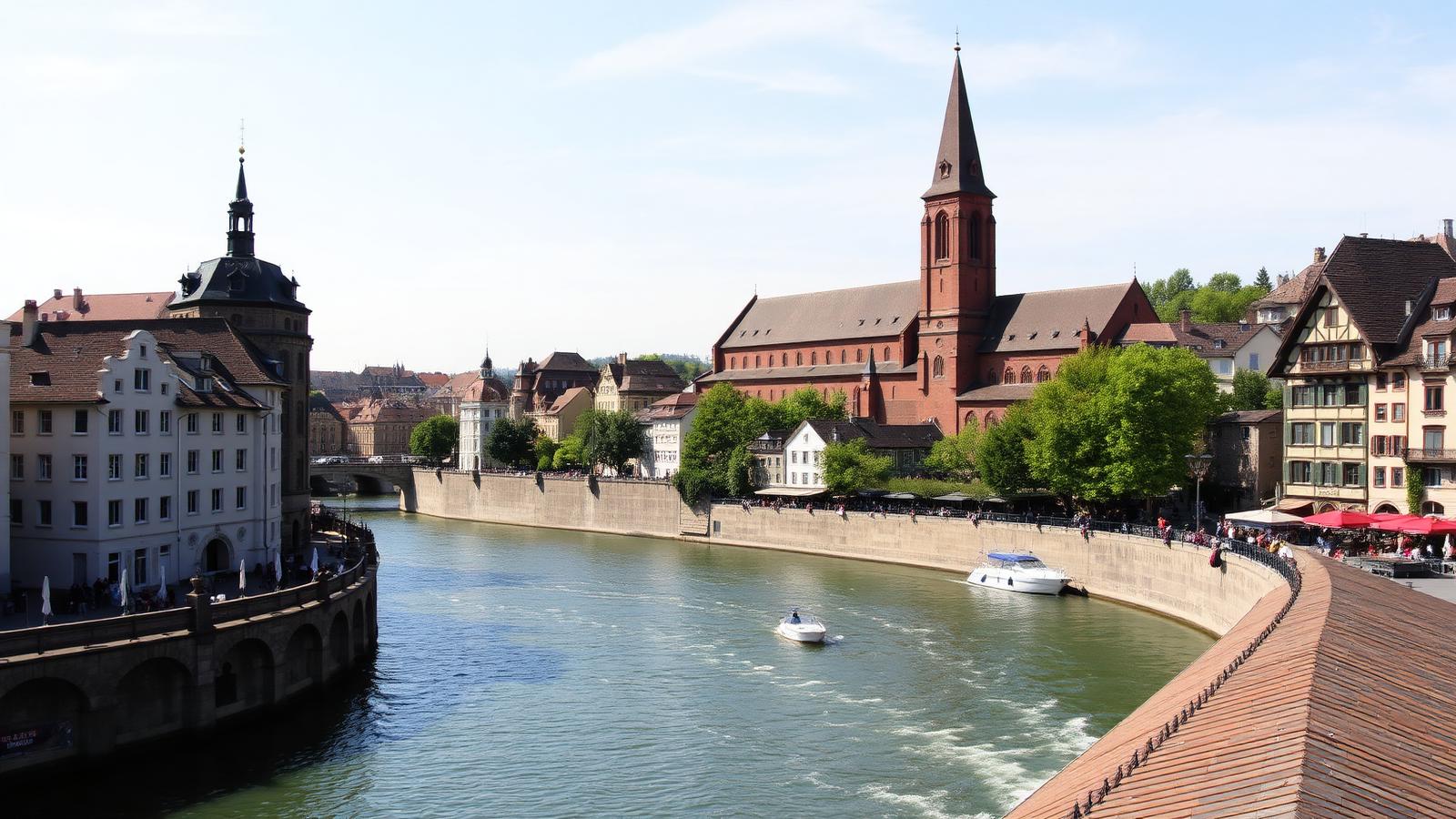
Daily life centres on the Rhine, which residents swim down in summer using a waterproof 'Wickelfisch' bag for their clothes — one of the most loved local rituals. The medieval Altstadt, world-class museums (Fondation Beyeler, Kunstmuseum, Tinguely) and Art Basel give the city a cultural weight far beyond its 180,000 residents.
Rents are noticeably lower than Zurich or Geneva, and many expats live just over the border in Germany (Lörrach, Weil am Rhein) or France (Saint-Louis, Huningue) for further savings. The catch is wealth tax, which is among the highest in Switzerland — relevant for higher net worth movers.
Canton of Basel-City · free tool
Calculate your net salary after Canton of Basel-City cantonal tax
Salary calculator — pre-filled for Canton of Basel-City. No signup.
Canton of Basel-City · free tool
Compare the cost of living in Basel with your current city
Cost of living tool — pre-filled for Canton of Basel-City. No signup.
Cost of living in Basel
Want a precise estimate? Use our cost of living tool or compare two cantons side-by-side at /cost.
1BR city centre CHF 1,500–2,200. German side (Lörrach, Weil) drops to EUR 700–1,200.
CHF 420–560/month. Major savings shopping in Germany on Saturdays.
BVB monthly pass CHF 80. U-Abo annual CHF 800.
Lunch menu CHF 20–28, dinner for two CHF 85–130. Strong Italian and Turkish food scenes.
Job market
Top industries
- Pharmaceuticals (Roche, Novartis)
- Biotech & life sciences
- Chemicals & specialty manufacturing
- Logistics (Rhine port)
- Banking (BIS, private banks)
Average salaries
Median household ~CHF 100,000. Pharma seniors CHF 130,000–220,000.
English is dominant at Roche/Novartis. German is needed for almost everything outside the lab.
Calculate your take-home pay with the tax calculator or salary calculator.
Best neighbourhoods to live in
The honest pros and cons
Pros
- Best cost-to-quality ratio of the three big Swiss cities
- Rhine swimming in summer is a genuine joy
- International schools strong (ISB, Aesch, Gymnasium Bäumlihof)
- Fly to anywhere via EuroAirport in France/Switzerland/Germany
Cons
- Wealth tax is among the highest in Switzerland
- Smaller dating and social pool than Zurich
- Very quiet on Sundays — even more than Zurich
- Carnival (Fasnacht) shuts the city for three days every February
Practical tips for new arrivals
German (Baseldütsch dialect). Hochdeutsch works at the doctor and town hall. English is fine inside Roche/Novartis bubbles.
Register at Einwohneramt within 14 days. Located at Spiegelgasse 6. Full registration guide →
Trams reach almost everywhere. Bike infrastructure is the best of any Swiss city.
Compare with other Swiss cities
Related guides
Register at your Gemeinde
Registration — Anmeldung in German, annonce d'arrivée in French, notifica d'arrivo in Italian — is the single appointment that switches on your life in Switzerland. It is what produces your residence permit, puts you in the cantonal register, assigns your tax commune, starts the clock the health insurers work to, and creates the address that banks, schools, the road-traffic office and Serafe all read from. You have 14 days from moving in, the fee is CHF 20–50, and the appointment itself usually takes 15 minutes. Almost everything that goes wrong here happens before the appointment: a missing apostille, an unsigned rental contract, or a booking system that had no free slot for three weeks. This guide covers the documents by permit type, the cantonal differences that actually bite, what late registration costs, and how the same process works when you move between communes or leave the country.
Read guideOpen a Swiss bank account
Once you have registered at your commune, you'll need a Swiss IBAN (starts with CH) to receive your salary, pay rent and settle QR-bills for insurance, tax and utilities. This guide covers the opening steps for new residents. To choose a provider, use our bank comparison; if you still live abroad or commute across the border, see the non-resident guide.
Read guideGet mandatory health insurance (KVG)
Basic health insurance (KVG / LAMal) is mandatory for everyone living in Switzerland. The benefits are identical across providers — only the price differs.
Read guide